Water as a Driver of Sustainable Economic Transformation
Strategic Dialogue on Water as a Driver of Sustainable Economic Transformation
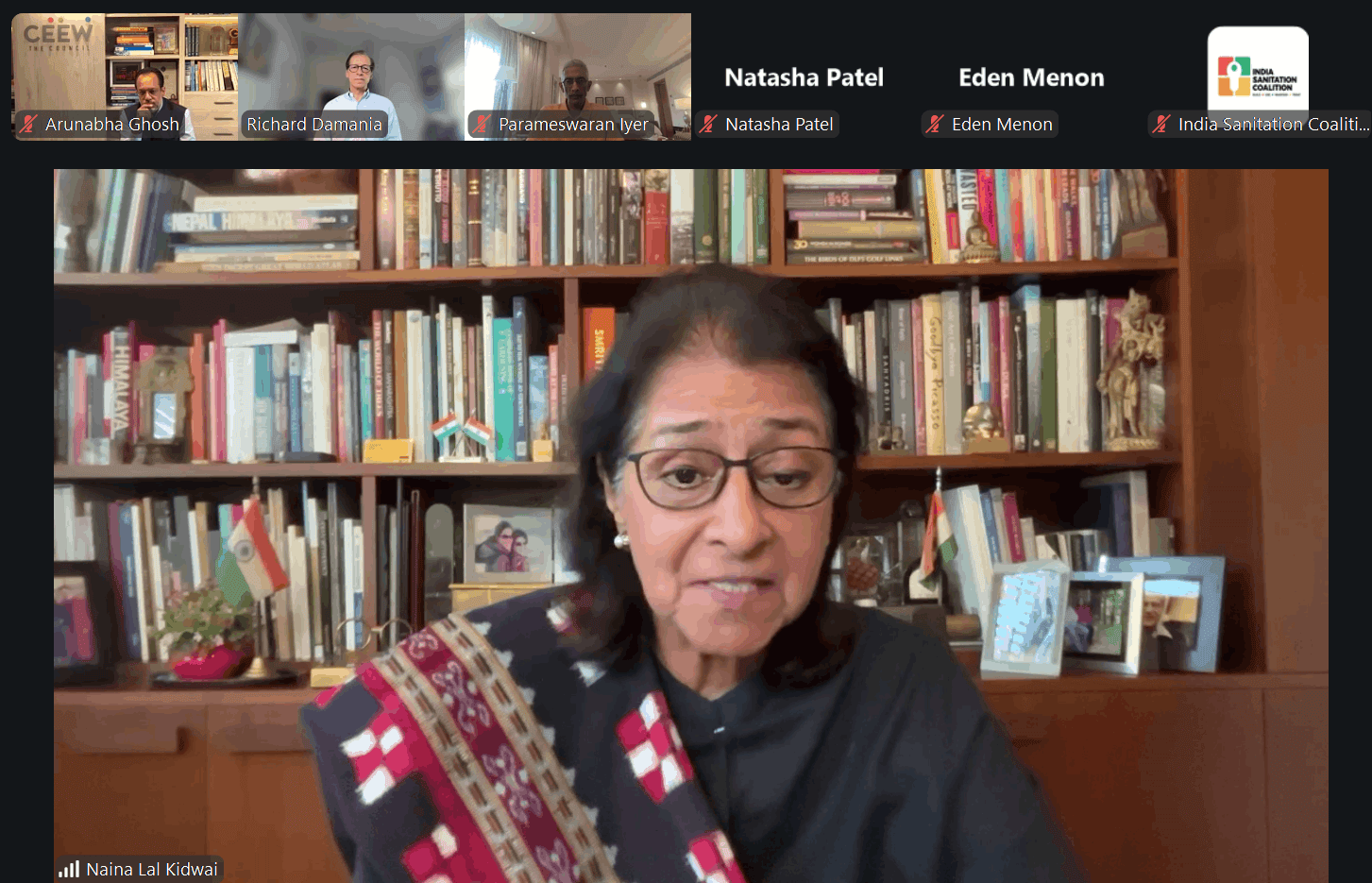
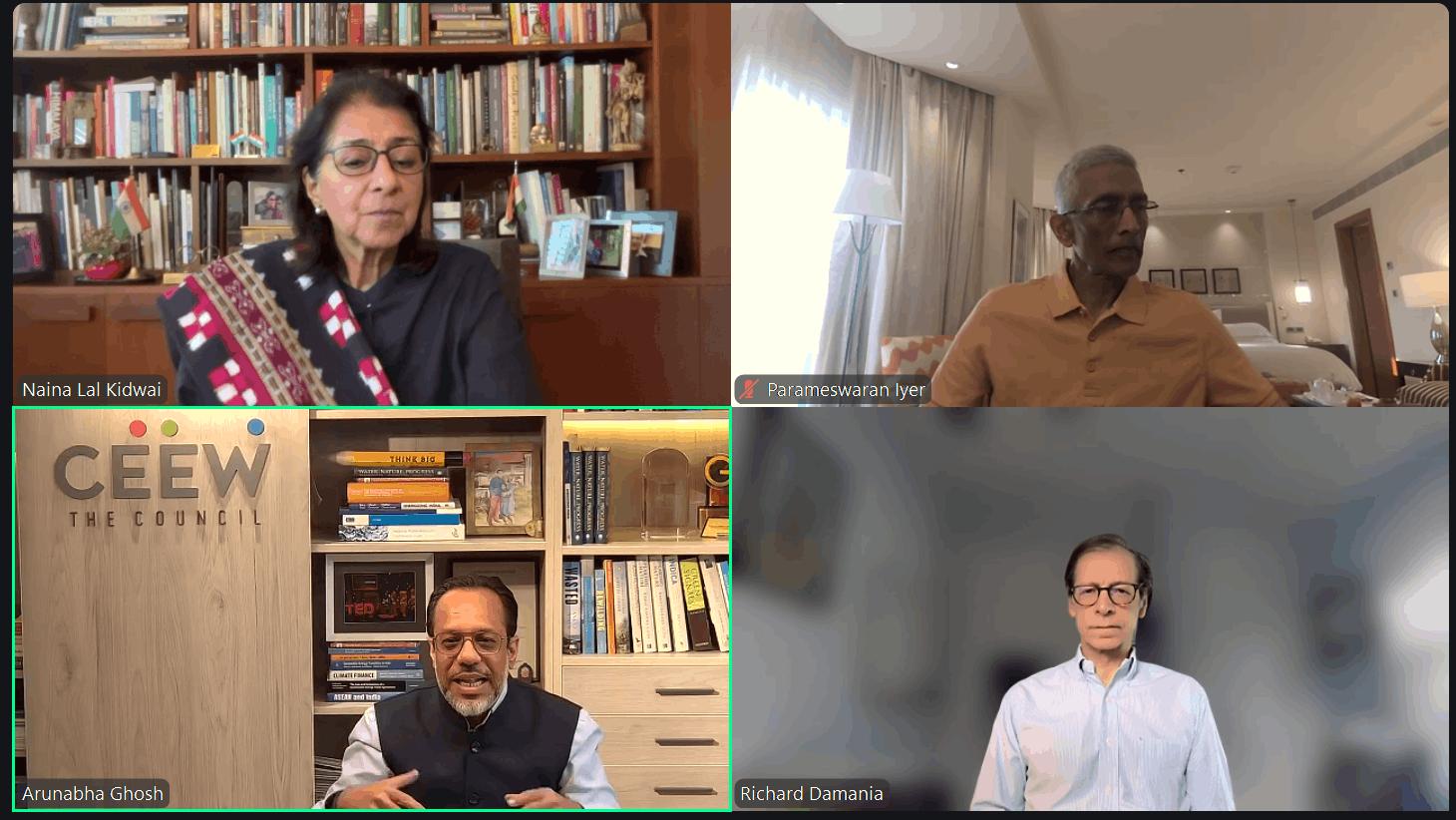
India Sanitation Coalition (ISC) convened a high-level Strategic Dialogue on "Water as a Driver of Sustainable Economic Transformation", bringing together eminent leaders and experts to discuss how water and sanitation can become key enablers of India's economic growth, environmental sustainability, and climate resilience.
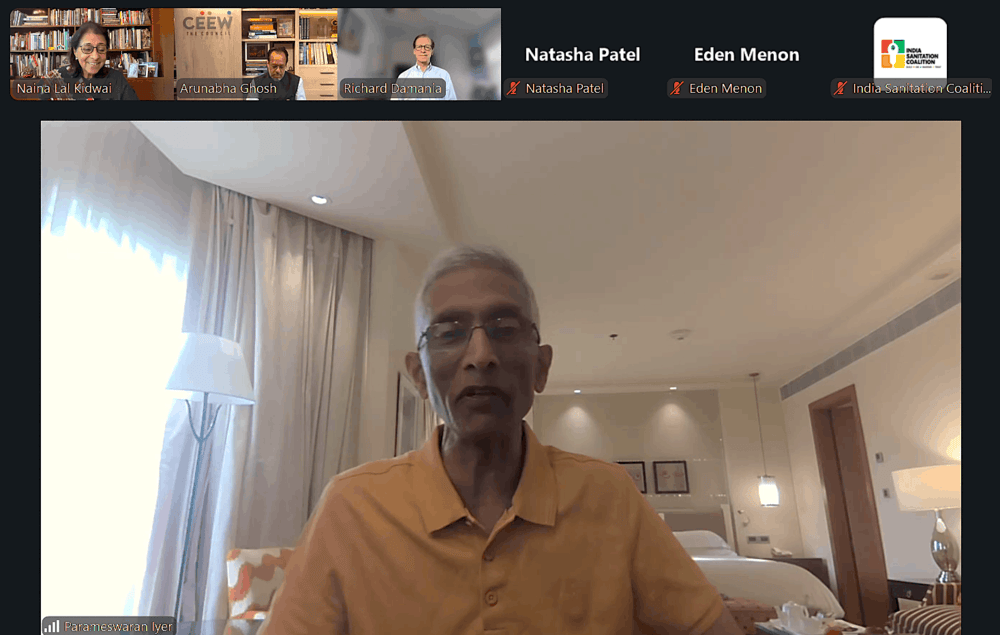
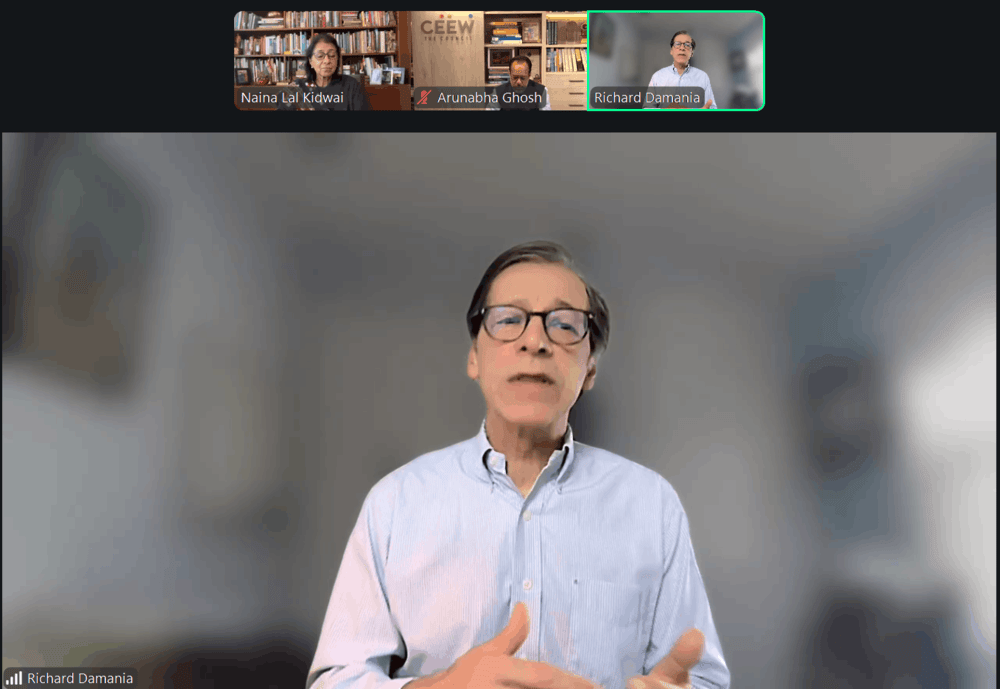
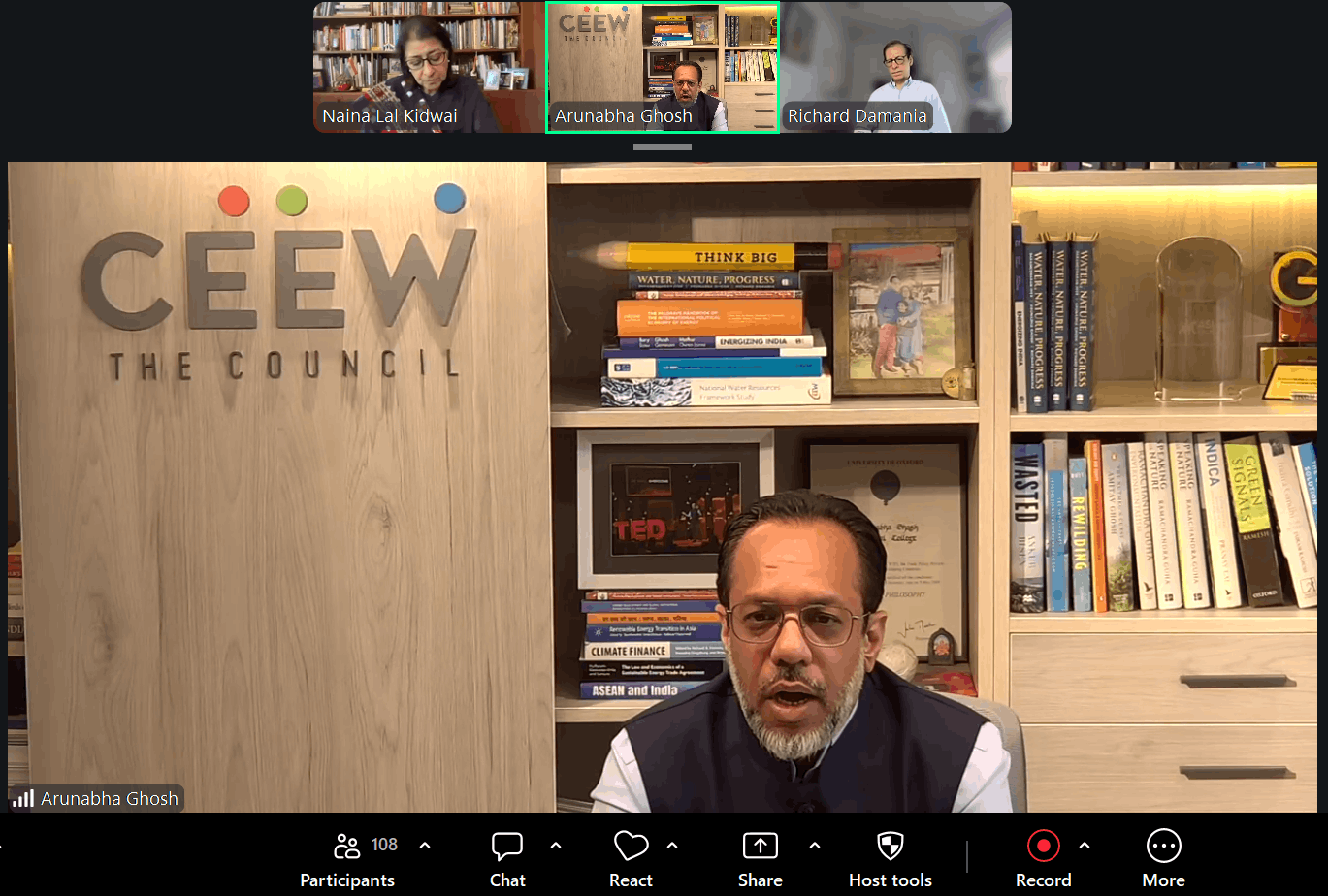
The session featured Shri Parameswaran Iyer, Executive Director, World Bank Group; Dr. Arunabha Ghosh, Chief Executive Officer (CEO), Council on Energy, Environment and Water (CEEW); and Mr. Richard Damania, Chief Economist, Sustainable Development Practice Group, World Bank. The discussion was moderated by Ms. Naina Lal Kidwai, Chair, ISC.
The discussion highlighted the need to move beyond conventional sanitation infrastructure and embrace a circular economy approach, where wastewater, faecal sludge, and solid waste are treated as valuable resources that generate economic, social, and environmental benefits.
The panel emphasized the immense potential of resource recovery through treated water reuse, energy generation, and nutrient recovery, while underscoring the importance of strengthening governance, institutional coordination, public-private partnerships, and innovative financing mechanisms to scale successful sanitation solutions across the country.
The dialogue also explored practical pathways for advancing the circular water economy, including greywater management, nature-based infrastructure, waste-to-energy solutions, and startup-led innovations. Speakers unanimously reinforced that meaningful progress will require close collaboration among government, industry, academia, and civil society.
Key Insights from the Speakers
Shri Parameswaran Iyer
Executive Director, World Bank Group
Shri Parameswaran Iyer highlighted sanitation as a critical driver of economic growth, livelihood generation, and environmental sustainability under the vision of Viksit Bharat 2047.
- Promoted decentralized faecal sludge management and safe desludging practices.
- Advocated resource recovery through a circular water economy.
- Encouraged context-specific greywater management solutions in rural areas.
- Supported greater reuse of treated water for agriculture, horticulture, and industry.
- Called for stronger state-level implementation through integrated governance across water, sanitation, and environmental sectors.
Dr. Arunabha Ghosh
Chief Executive Officer (CEO), Council on Energy, Environment and Water (CEEW)
Dr. Arunabha Ghosh emphasized that water and sanitation should be recognized as essential economic infrastructure rather than welfare investments.
- Highlighted investment and employment opportunities through the circular water economy.
- Promoted treated water reuse, fertilizer production, and energy recovery.
- Called for innovative financing models and long-term industrial offtake agreements.
- Encouraged wider adoption of nature-based infrastructure such as wetlands.
- Advocated improved public acceptance of treated wastewater, better water pricing, and integrated planning for urban and peri-urban regions.
Mr. Richard Damania
Chief Economist, Sustainable Development Practice Group, World Bank
Mr. Richard Damania described water as a productive economic asset that requires efficient management supported by robust institutions.
- Emphasized governance, market incentives, and accountability over technology.
- Advocated creating reliable markets for treated water.
- Promoted nature-based approaches such as Sponge Cities.
- Supported climate-resilient urban planning.
- Called for integrated water governance, institutional accountability, and stronger collaboration between governments, the private sector, and communities.
Conclusion
The dialogue concluded with a shared recognition that India's transition toward a circular water economy will require integrated policies, innovative financing, strong institutions, and sustained partnerships.
By treating water and sanitation as strategic economic assets, India can unlock new opportunities for sustainable development, climate resilience, and inclusive growth while advancing the vision of Viksit Bharat 2047.