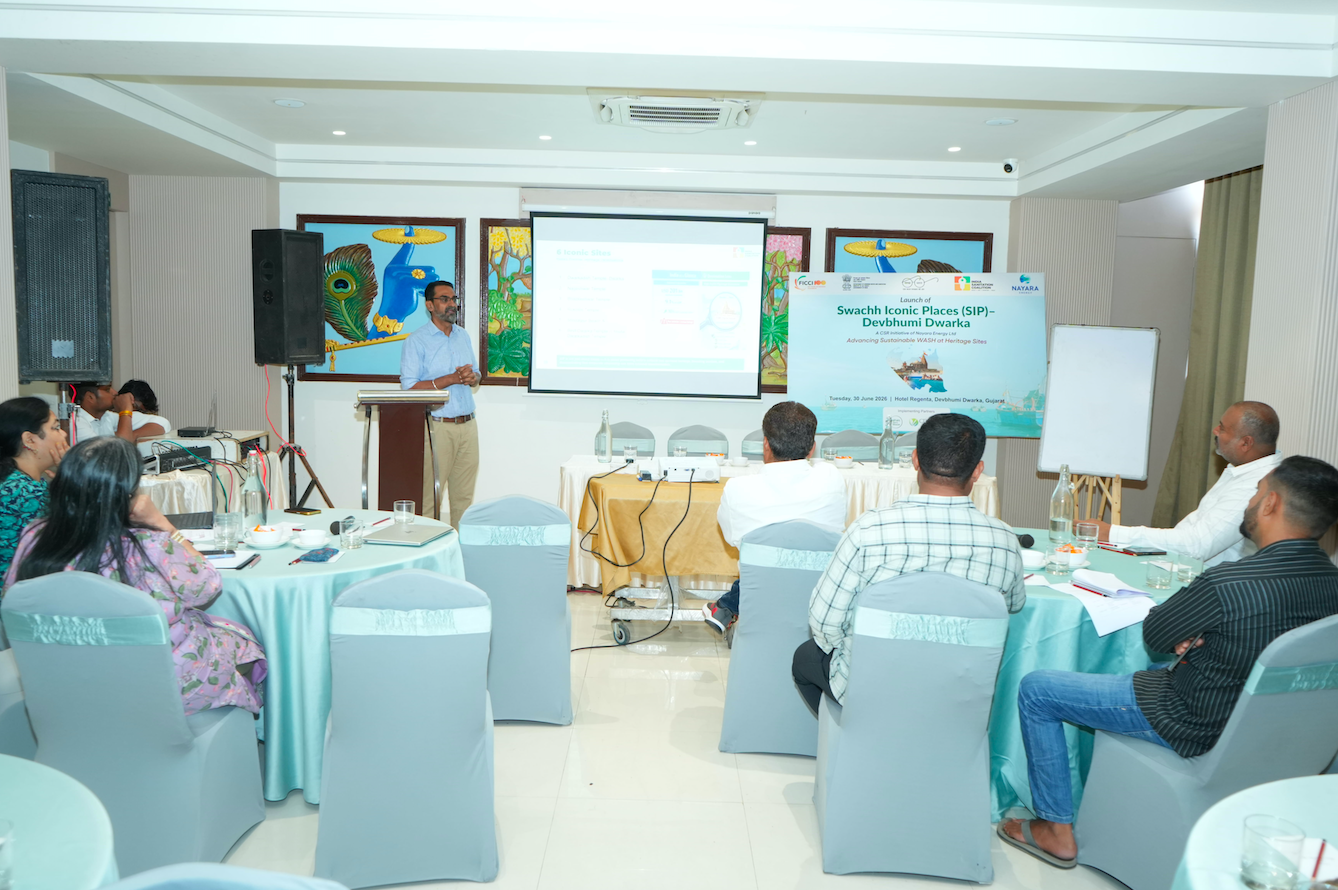
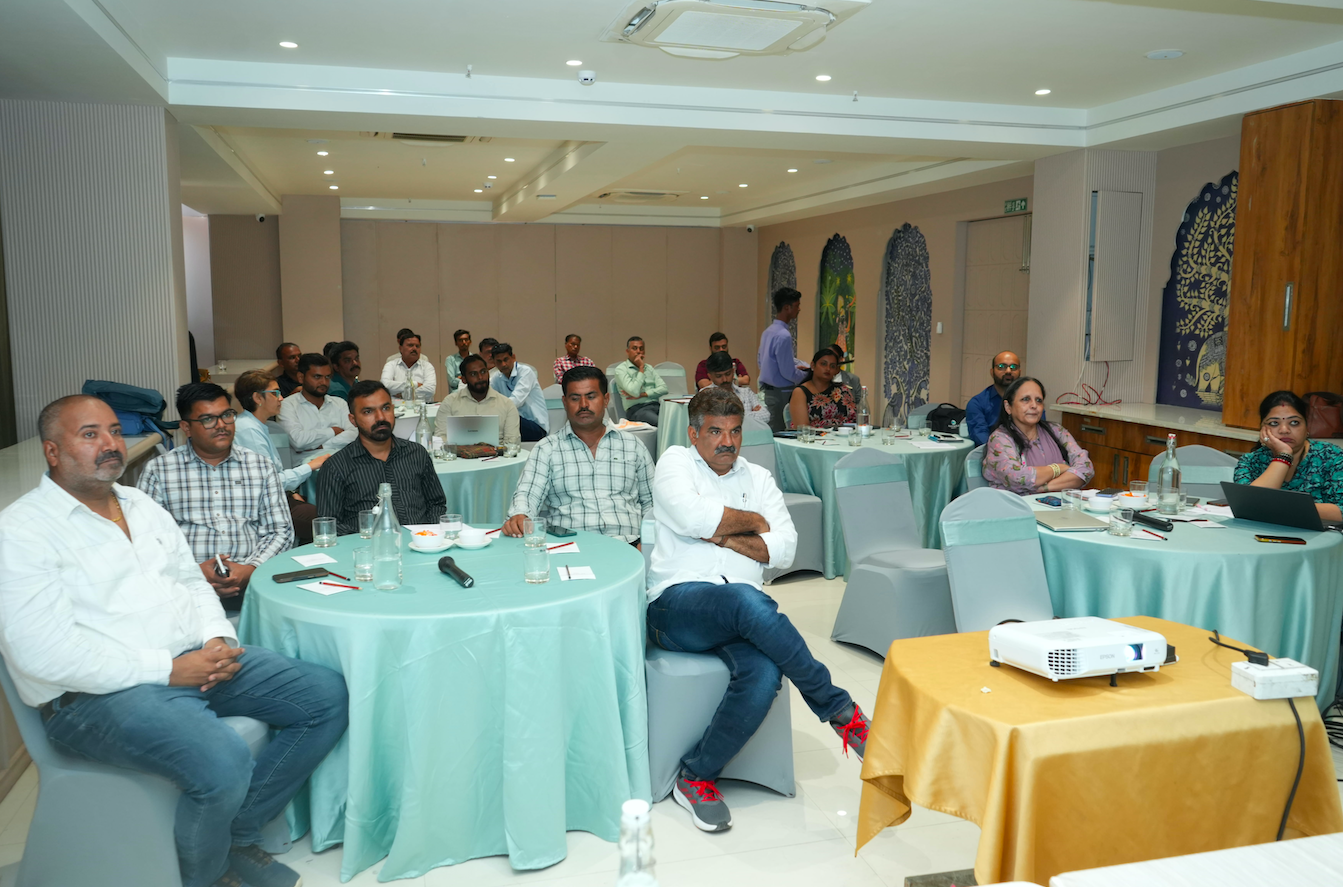
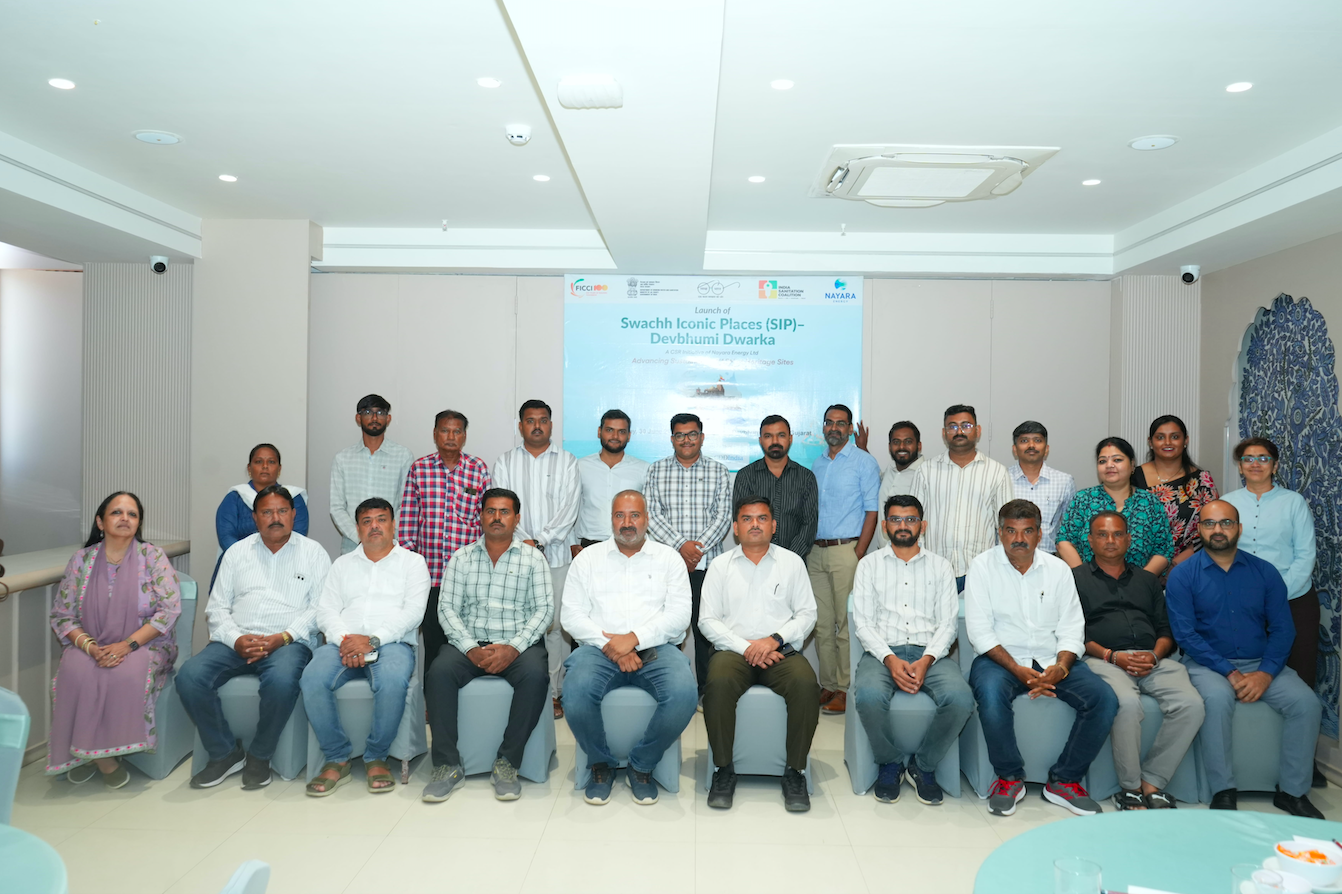
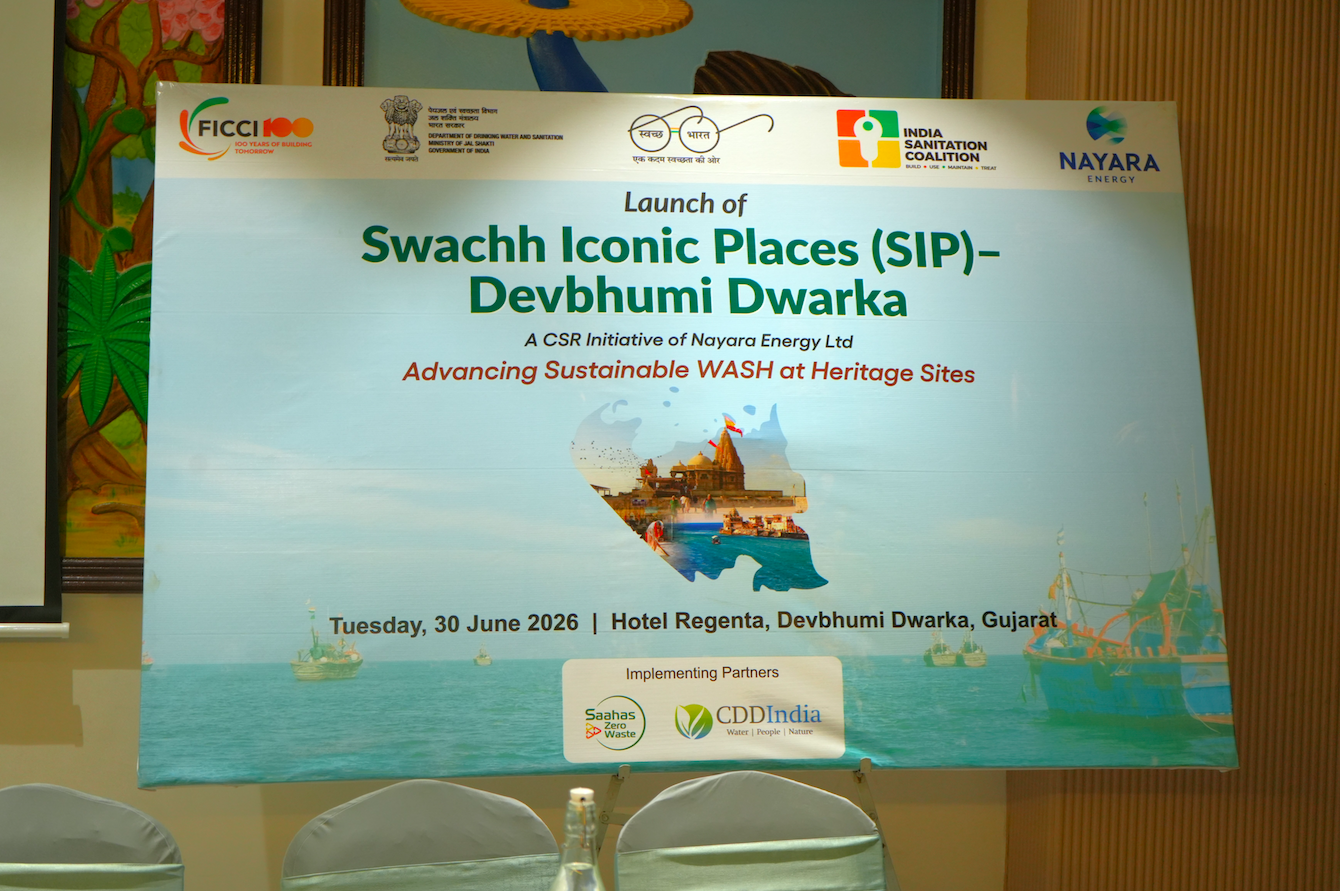
Swachh Iconic Places Devbhumi Dwarka
The Swachh Iconic Places (SIP) initiative is a flagship programme under the Swachh Bharat Mission (SBM), dedicated to elevating cleanliness, sanitation, and environmental standards at India's most visited heritage, spiritual, and cultural landmarks. India Sanitation Coalition (ISC), hosted by FICCI, serves as the anchor organisation — bringing together government, corporate partners, and on-ground implementation specialists to transform these sacred sites.
The current phase of SIP brings this mission to Devbhumi Dwarka, one of India's most revered coastal pilgrimage destinations, through a landmark partnership between ISC and Nayara Energy. This initiative covers two integrated work streams: Solid Waste Management and Liquid Waste Management, each executed by a specialist implementing partner.
The objectives of this initiative are:
- To restore and sustain cleanliness, sanitation, and environmental dignity at the iconic pilgrimage sites of Devbhumi Dwarka, serving millions of devotees and tourists each year.
- To establish a comprehensive Solid Waste Management (SWM) system select six sites in Dwarka (5) & Okha (1), including waste segregation, elimination of Garbage Vulnerable Points (GVPs), legacy waste remediation, and development of Material Recovery Facilities (MRFs).
- To implement Liquid Waste Management (LWM) solutions at five iconic sites, including provision of safe drinking water, development of aspirational toilet blocks, rainwater harvesting systems, mangrove restoration, and restoration of the historic Kunds.
- To ensure long-term sustainability through strengthened stakeholders engagement, robust financial planning, and strong alignment with government systems at the local, district and state levels.
Programme Coverage — Selected Iconic Sites
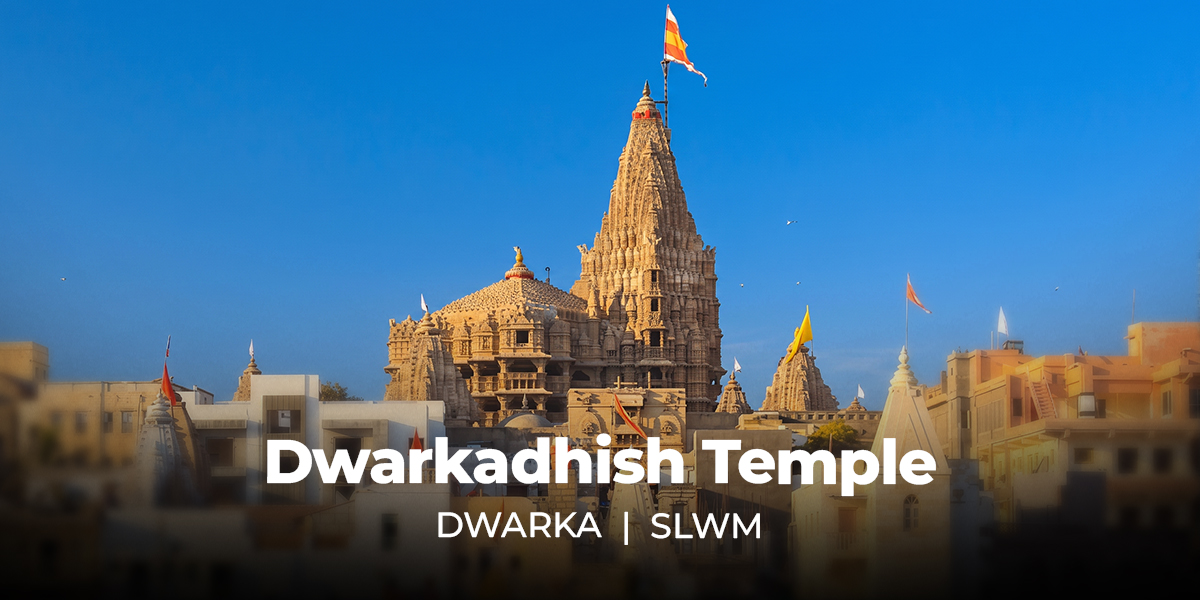
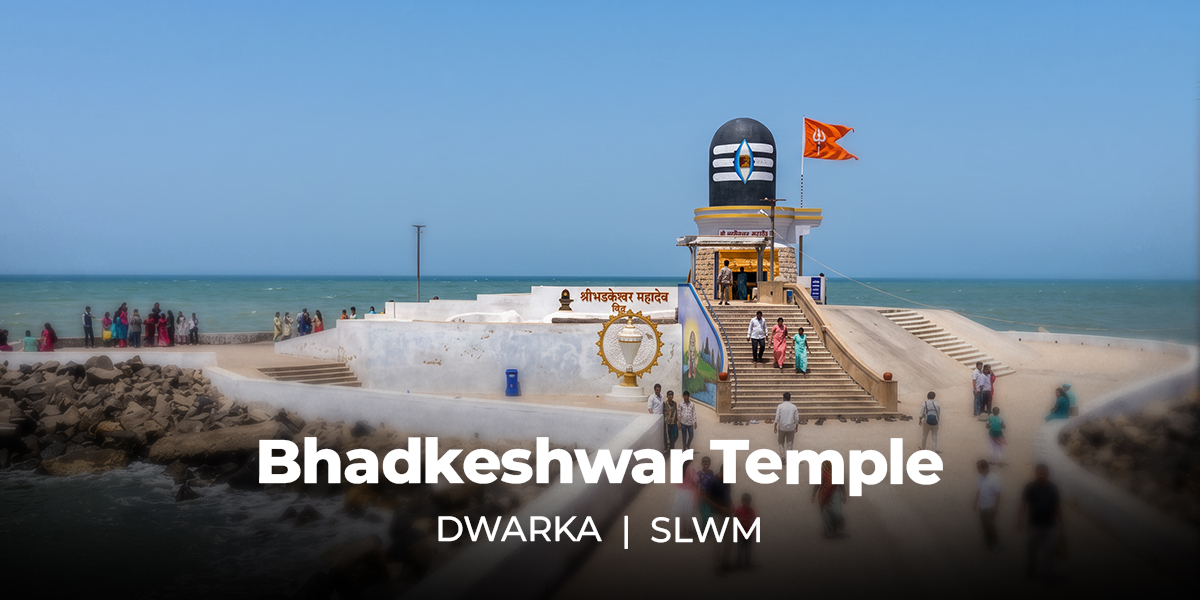
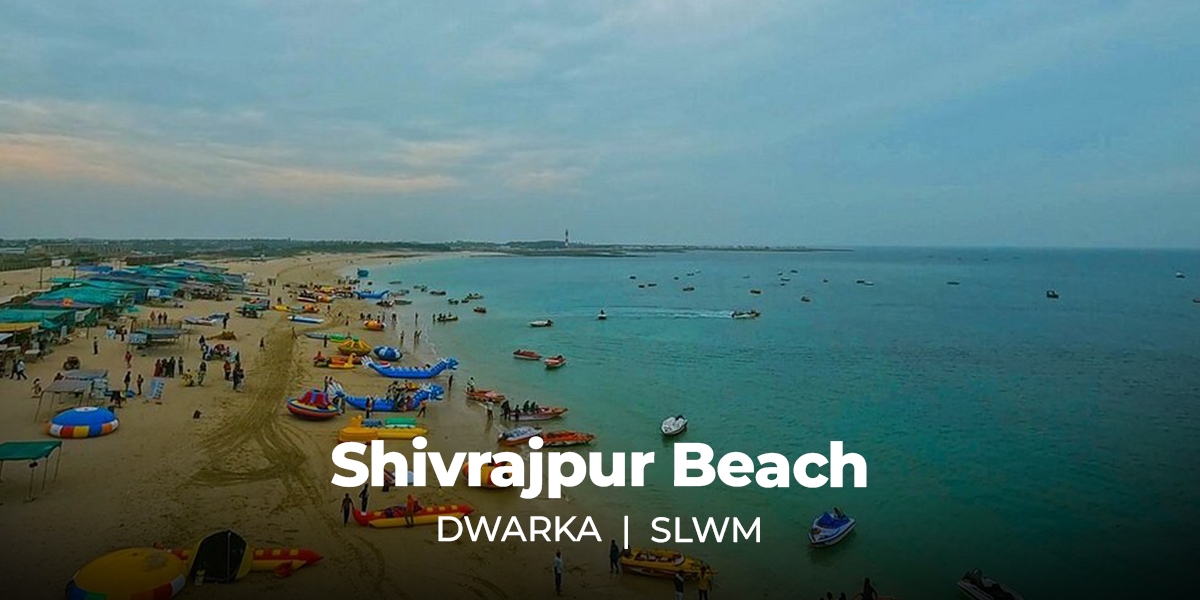
The initiative currently covers the following iconic sites across Devbhumi Dwarka:
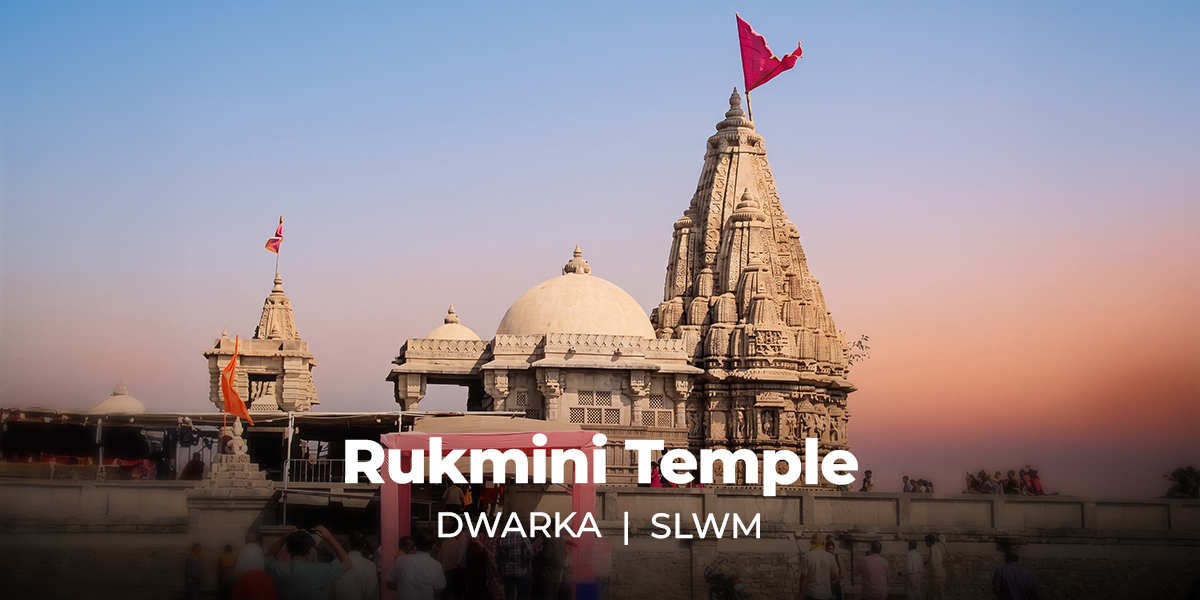
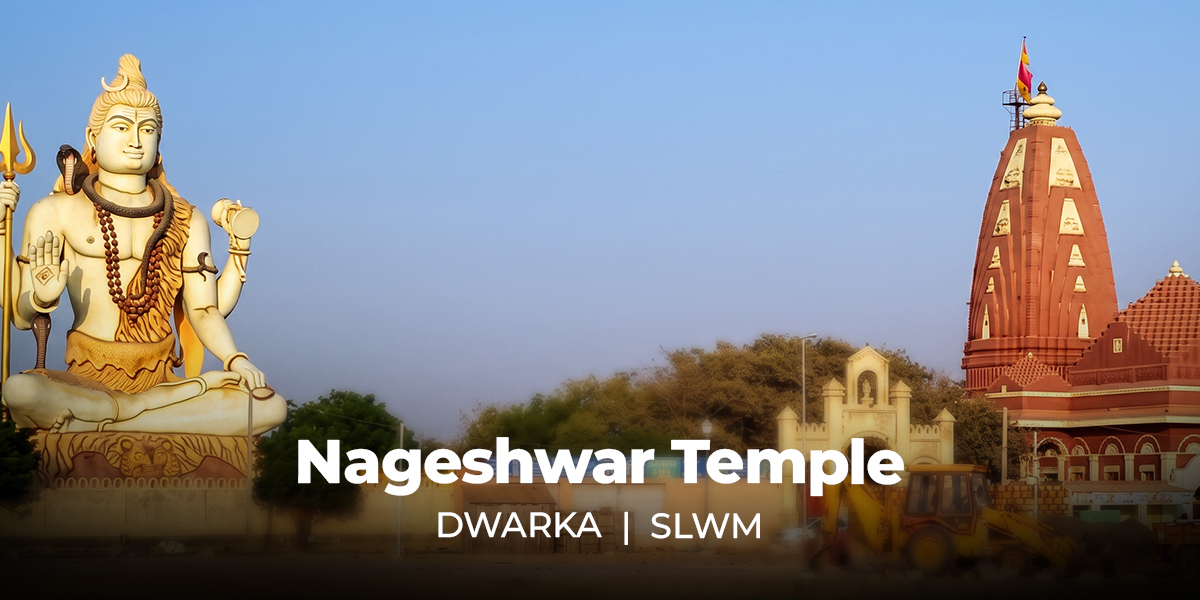
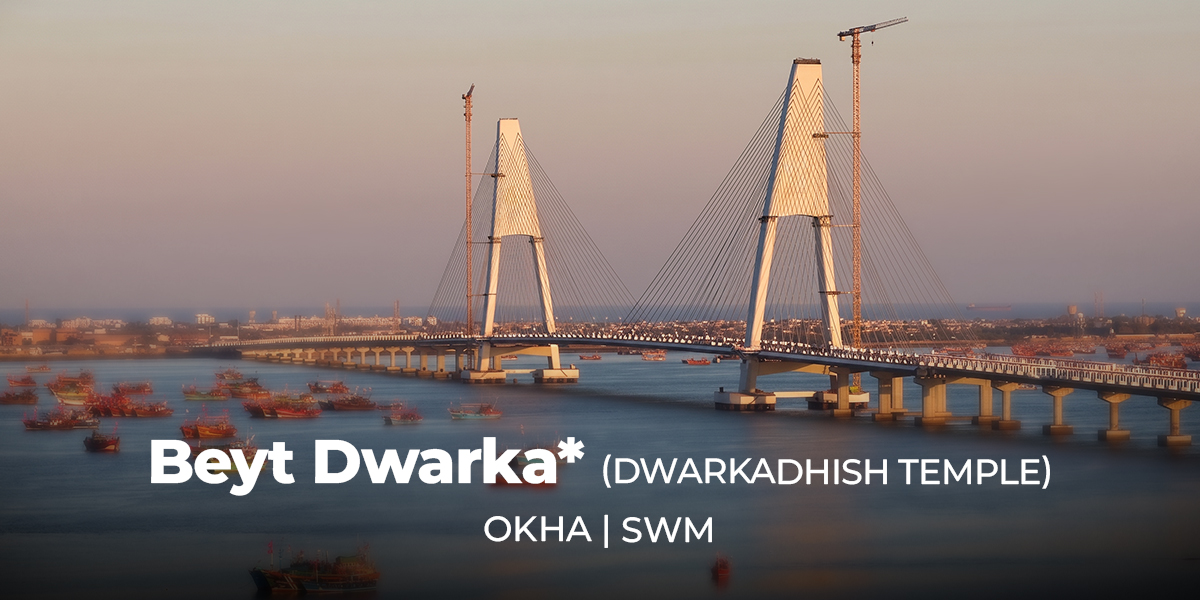
*Only Solid Waste Intervention at this site
Focus Areas / Intervention Categories
This programme covers the full sanitation value chain across both solid and liquid waste, with a strong emphasis on climate-resilient and community-owned solutions. The three primary focus areas are:
♻️ Solid Waste Management
💧 Liquid Waste Management
🌿 Biodiversity & Heritage
Roles of Stakeholders / Partners
1. Nayara Energy: As the CSR partner of this initiative, Nayara Energy brings financial resources and institutional commitment to drive sanitation transformation at one of Gujarat's most significant pilgrimage destinations. Nayara Energy's partnership with ISC positions this initiative as a flagship example of corporate-government-civil society collaboration under Swachh Bharat Mission.
2. India Sanitation Coalition (ISC): As the anchor organisation and champion of the Swachh Bharat Mission, ISC providing end-to-end programme oversight for the initiative at Devbhumi Dwarka. ISC leads government engagement and coordination at local, district and state levels, manages baseline and monitoring frameworks, oversees implementation partner performance, and handles all external stakeholder communication. ISC also providing corporate outreach support to Nayara Energy and ensures the programme aligns with national SBM standards.
3. Saahas Zero Waste (SZW) — Solid Waste Management Partner: Saahas Zero Waste is the expert implementing partner for Solid Waste Management in and around select six sites in Devbhumi. SZW's mandate covers waste segregation systems, GVP eradication, legacy waste clearance, bulk waste generator mapping, and establishment of composting and Material Recovery Facilities (MRFs). SZW has already completed the rapid field assessment, identifying the landfills and the open dump at gaushalas near the sites.
4. CDD India — Liquid Waste Management Partner: CDD India is the specialist implementing partner for Liquid Waste Management at five iconic sites. CDD India's scope covers drinking water and handwashing infrastructure, aspirational toilet blocks, rainwater harvesting systems, mangrove restoration, and restoration of the historic Kunds (stepwell). CDD India has completed liquid waste infrastructure mapping across all five target sites.
5. IEC/BCC Partner – TBD
Programme Process & Progress
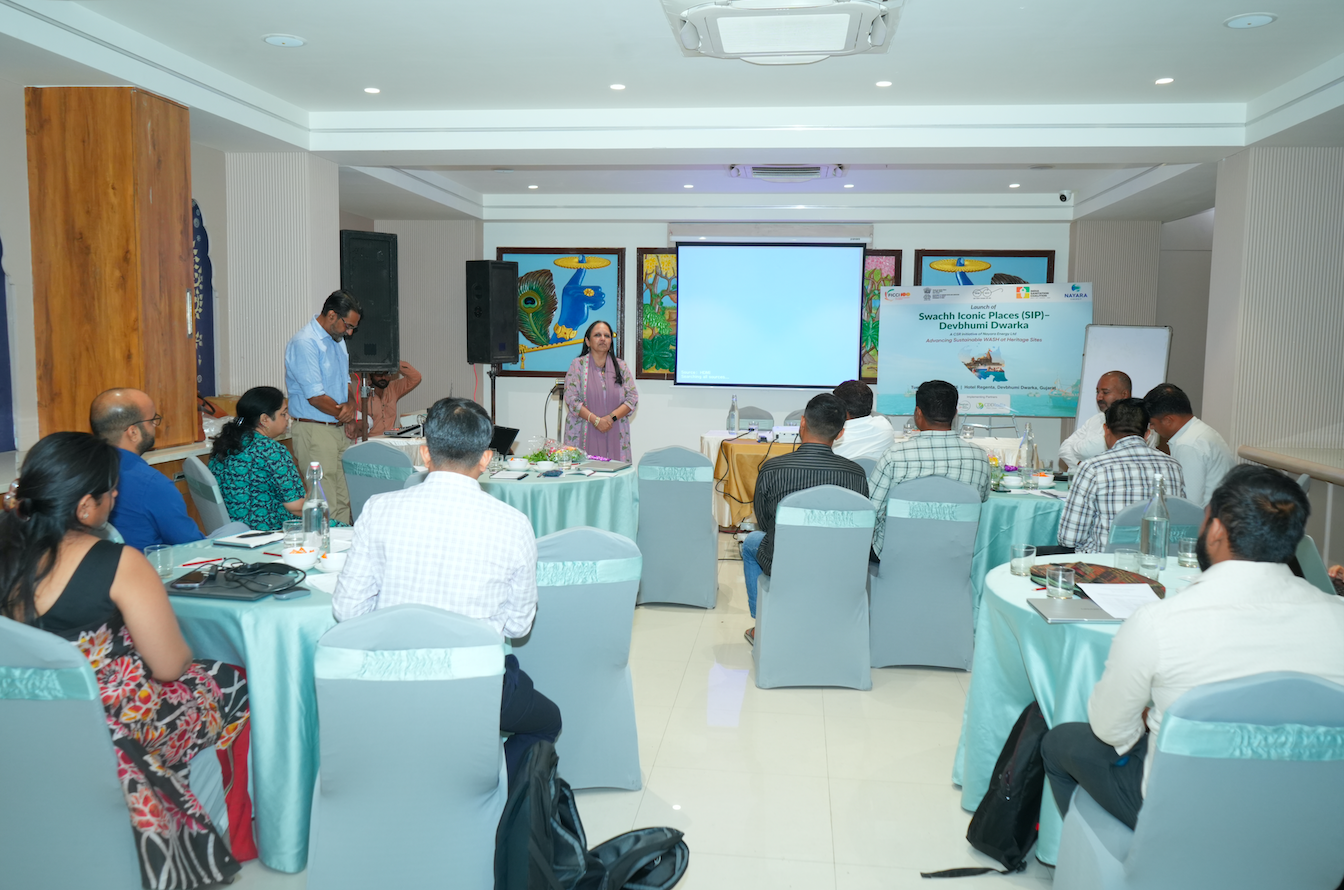
The programme follows a structured, phased approach — from rapid ground assessment through baseline data collection to full physical implementation. The programme is being executed across three phases, each with defined scope, partners, and deliverables.
Phase 0: Rapid Assessment & Stakeholder Framework
Completed. This phase included a full rapid assessment across all selected temples, and iconic sites in Dwarka and Okha; the onboarding of specialist partners Saahas Zero Waste (SZW) and CDD India; submission of detailed tentative project proposals with Gantt Charts and defined roles for all stakeholders; and high-level government brief engagements (High-level meetings were held with the State Mission Director, the District Magistrate, the Deputy Sub-Divisional Magistrate, Circle Officers of Dwarka and Okha, and SBM Engineers and Sanitary Inspectors) at local and district levels. The SZW field team identified challenges around the solid waste management (e.g. landfill near Rukmini Temple and an open dump at the Gaushala). CDD India simultaneously mapped liquid waste infrastructure across all five target sites and found similar challenges for liquid waste management.
Read More ...
Phase 1: Baseline Assessment
Completed. Comprehensive data collection and benchmarking across all applicable indicators for SLWM, covering primarily solid waste, liquid waste, water supply, hydrology, geotechnical investigation, rainwater harvesting, biodiversity, and site-specific parameters.
Read More ...
Phase 2: Full Implementation
Upcoming. Physical interventions across solid waste infrastructure, liquid waste systems, water and sanitation facilities, biodiversity conservation, and heritage water body restoration.
Read More ...
PHASE 0 ACHIEVEMENTS
Key Achievements - What Has Been Completed
- Rapid assessment completed across all selected temples, and iconic sites in Dwarka and Okha.
- Specialist implementation partners onboarded — Saahas Zero Waste (SZW) for Solid Waste Management and CDD India for Liquid Waste Management. One additional partner to be onboarded for IEC-BCC.
- Tentative project proposals submitted with Gantt Charts and defined roles for Nayara Energy, ISC, SZW, CDD India, and the IEC-BCC NGO partner.
- High-level initial government engagement completed — meetings held with: State Mission Director, District Magistrate, Deputy Sub-Divisional Magistrate, Circle Officers of Dwarka and Okha, and SBM Engineers and Sanitary Inspectors.
- SZW preliminary field assessment
- CDD India preliminary field assessment
Rapid Assessment Scope - 13 Key Indicators Studied (Exploratory Level)
A. Sanitation infrastructure study
B. Faecal sludge and septage management
C. Liquid Waste Management: wastewater sources, treatment facilities, reuse, disposal, drains, stagnant water points
D. Solid Waste Management: segregation, collection systems, storage areas, GVPs, legacy waste, bulk generators
E. Waste Processing: composting, recycling, Material Recovery Facilities (MRFs)
F. Waste Disposal: quantum to landfills, target reduction from landfills
G. Sustainability & Maintenance: maintenance protocol, financial sustainability, community engagement, waste-to-energy
H. Data collection: maps, satellite imagery, GIS tools, remote sensing, rainfall data
I. Geotechnical investigation: soil quality assessment, construction practices
J. Hydrology and groundwater studies
K. Rainwater harvesting and rejuvenation
L. Geomorphology: flood management and slope stability
M. Other site-specific parameters
Phase 1: Baseline Assessment
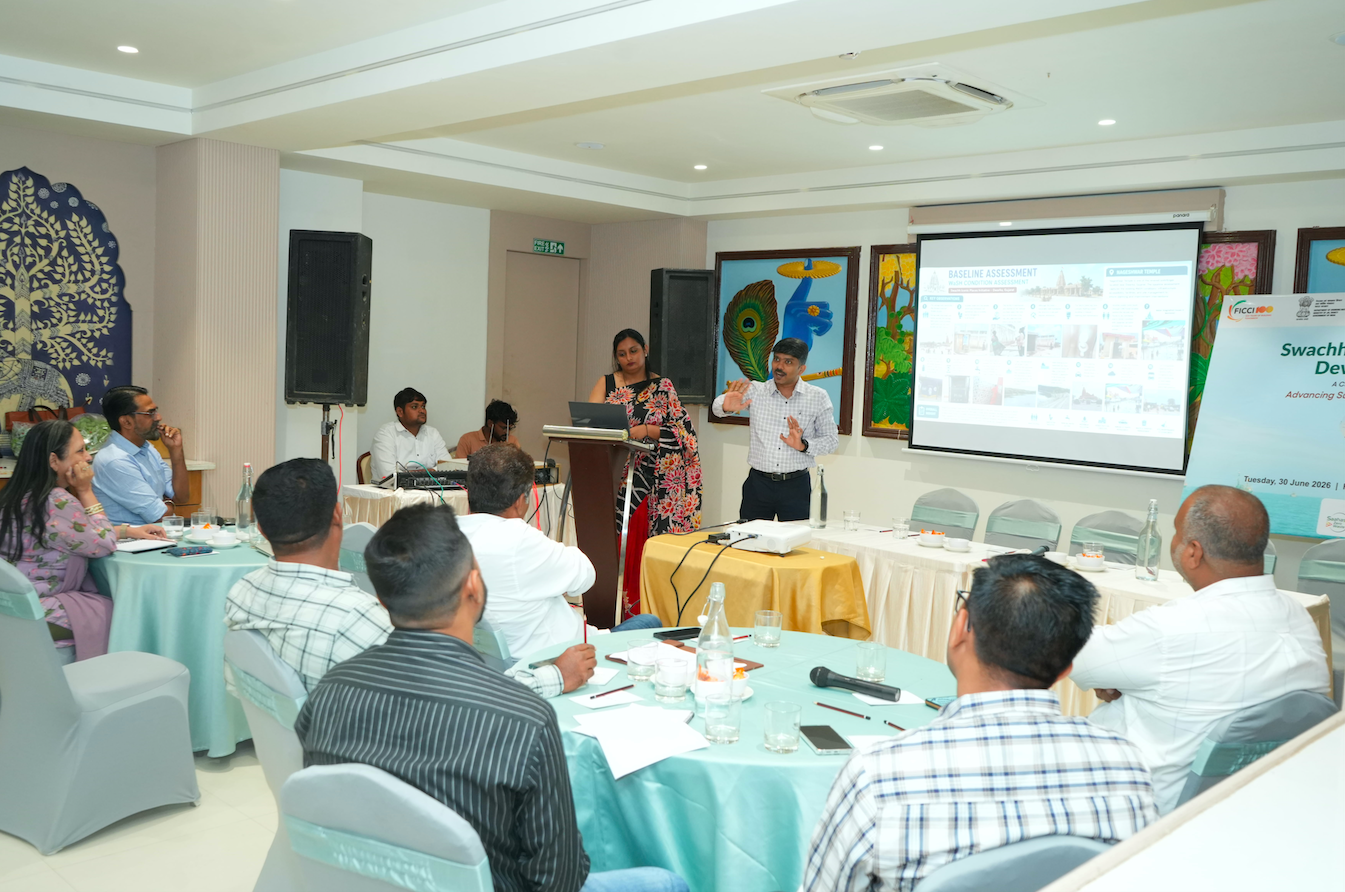
Baseline study of the existing Solid Waste Management (SWM) systems and WASH practices at the selected sites in Dwarka and Okha was undertaken. The study assessed the current status of waste management and sanitation practices, identified key gaps and challenges, and supported the preparation of a detailed intervention roadmap outlining the processes, technologies, and implementation strategies to be adopted for improved service delivery and sustainable outcomes.
Indicators for Baseline assessment for Solid Waste Management:
Solid Waste Management
- Waste Segregation: Current status of segregation at source at the site
- No. of collection points, Garbage vulnerable points, legacy waste, Organic waste, identified bulk waste generators, etc.
Waste Processing Infrastructure:
- Composting: Availability of cluster composters & composting units for biodegradable waste to produce organic manure, etc.
- Recycling: Status of recycling for plastic, metal, and other recyclable materials, market linkages
- Checked availability of nearest MRF centres, vehicles for collection, green workers, Status of door-to-door collection of waste, etc.
Waste Disposal:
- Landfills: Quantum of solid waste generated and sent to landfills, target reduction of waste on these landfills.
Sustainability and Maintenance:
- Maintenance Protocols: Regular cleaning schedules, repair and maintenance plans.
- Community Engagement: Involvement & interest of local communities in maintenance of their village and monitoring activities.
- Waste-to-Energy: Explored waste-to-energy technologies to convert waste into usable energy.
- Waste service chain, value chain player like waste pickers, green workers, kabadiwala were available but not integrated in the system.
Quality assessment of waste
Data collection - Maps, and satellite Image
Indicators for Baseline assessment for Liquid Waste Management:
- Gap analysis and GIS/database documentation of identified sites.
- Assessment of water quality and quantity through sampling, laboratory analysis, and technical evaluations.
- Stakeholder mapping, consultation planning, and stakeholder engagement through meetings and focus group discussions (FGDs).
- Training Needs Assessment (TNA), including identification of capacity gaps and development of draft training modules and training plans.
- Assessment of IEC requirements, including prototype IEC materials and communication strategy development.
- Assessment of environmental interventions, including mangrove plantation, biodiversity conservation sites, and rejuvenation of water bodies/kunds.
- Gap analysis supported by geotechnical investigations, hydrological assessments, and structural design reviews.
- Gap analysis for retrofitting existing sanitation infrastructure and development of aspirational toilet blocks with onsite treatment systems.
Phase 2: What Will Be Delivered — Solid and Liquid Waste Management Interventions
The tentative intervention areas under the Solid Waste Management:
♻️ Waste Segregation at Source
Comprehensive waste segregation systems established at source across both towns — ensuring dry, wet, and hazardous waste streams are separated from the point of generation, laying the foundation for all downstream processing.
🗺️ GVP Identification & Eradication
Systematic identification and eradication of Garbage Vulnerable Points (GVPs) — hotspots of open dumping and waste accumulation — within and around the iconic sites, to eliminate persistent sources of public health risk and visual blight.
🧹 Legacy Waste Remediation
Clearance of accumulated legacy waste from existing dump sites — including the dumpsite near Rukmini Temple and the open dump at the Gaushala — restoring the immediate environment to a clean and dignified baseline.
🏭 Bulk Waste Generator Mapping & Management
Mapping and structured management of bulk waste generators — hotels, dhabas, mandaps, and commercial establishments — within the programme coverage area, bringing high-volume waste sources into a formalised and accountable waste management system.
📦 Waste Processing Infrastructure
Establishment of end-to-end waste processing infrastructure — including composting units for organic waste, dedicated recycling facilities, and Material Recovery Facilities (MRFs) — to ensure segregated waste is productively processed rather than discarded.
⛏️ Landfill Diversion
Significant, measurable reduction in the quantum of waste being sent to landfills — achieved through source segregation, active GVP management, and processing infrastructure — contributing directly to Swachh Bharat Mission targets.
🌱 Sustainability & Long-Term Maintenance
Sustainable maintenance protocols designed with community ownership and financial viability at their core — ensuring that the systems, infrastructure, and behavioural change delivered through this programme continue to function and deliver impact well beyond the intervention period.
The tentative intervention areas under the Liquid Waste Management:
💧 Water & Hygiene
Drinking water and handwashing stations at multiple locations in and around the iconic sites. Rainwater Harvesting (RWH) system and storage tank structure.
🚽 Sanitation
Aspirational Toilet Blocks will be built to cater to the needs of the tourists at the identified temple premises. This will also explore onsite treatment systems for wastewater treatment where necessary.
🌿 Biodiversity
Mangrove restoration and biodiversity conservation at coastal locations, including Blue Flag Shivrajpur Beach.
🏛️ Water Body Restoration
The historic Kunds (stepwell) will be taken up for restoration— with a focus on transforming them into places that are clean and reflect the rich history of the heritage town.
Partners

Gallery